Customer Server Memory DRAM Chip Replacement: Full 8-Step BGA Rework Process
2026-04-10 · ResolderWorks
"Our server memory keeps throwing errors." "A specific memory module keeps failing repeatedly."
If you're seeing symptoms like these, a faulty DRAM chip is likely the culprit.
Server-grade DDR RAM is expensive, so rather than replacing the entire module, accurately identifying and replacing only the defective chip is far more cost-effective. In this case, a customer reached out reporting server memory errors. After thorough diagnostics, we identified a specific faulty DRAM chip as the cause and proceeded with a full BGA chip replacement.
The key to this repair: proper donor chip preparation. After removing the defective chip, a working donor chip must be prepared for transplant. Removing old solder via solder wicking, thorough cleaning, and precision reballing to form new solder balls are the critical steps that determine the quality of the entire rework.
The Full Repair Process — 8 Detailed Steps
"Our server memory keeps throwing errors." "A specific memory module keeps failing repeatedly."
If you're seeing symptoms like these, a faulty DRAM chip is likely the culprit.
Server-grade DDR RAM is expensive, so rather than replacing the entire module, accurately identifying and replacing only the defective chip is far more cost-effective. In this case, a customer reached out reporting server memory errors. After thorough diagnostics, we identified a specific faulty DRAM chip as the cause and proceeded with a full BGA chip replacement.
The key to this repair: proper donor chip preparation. After removing the defective chip, a working donor chip must be prepared for transplant. Removing old solder via solder wicking, thorough cleaning, and precision reballing to form new solder balls are the critical steps that determine the quality of the entire rework.
The Full Repair Process — 8 Detailed Steps
The repair follows eight stages, from defective chip removal to hot air reflow.
Step 1. Defective Chip Removal
The faulty DRAM chip identified through diagnostics is heated with a hot air gun to melt the BGA solder balls, then carefully separated from the board. The chip is lifted vertically to avoid damaging the PCB pads, with care taken to protect surrounding components from excessive heat.
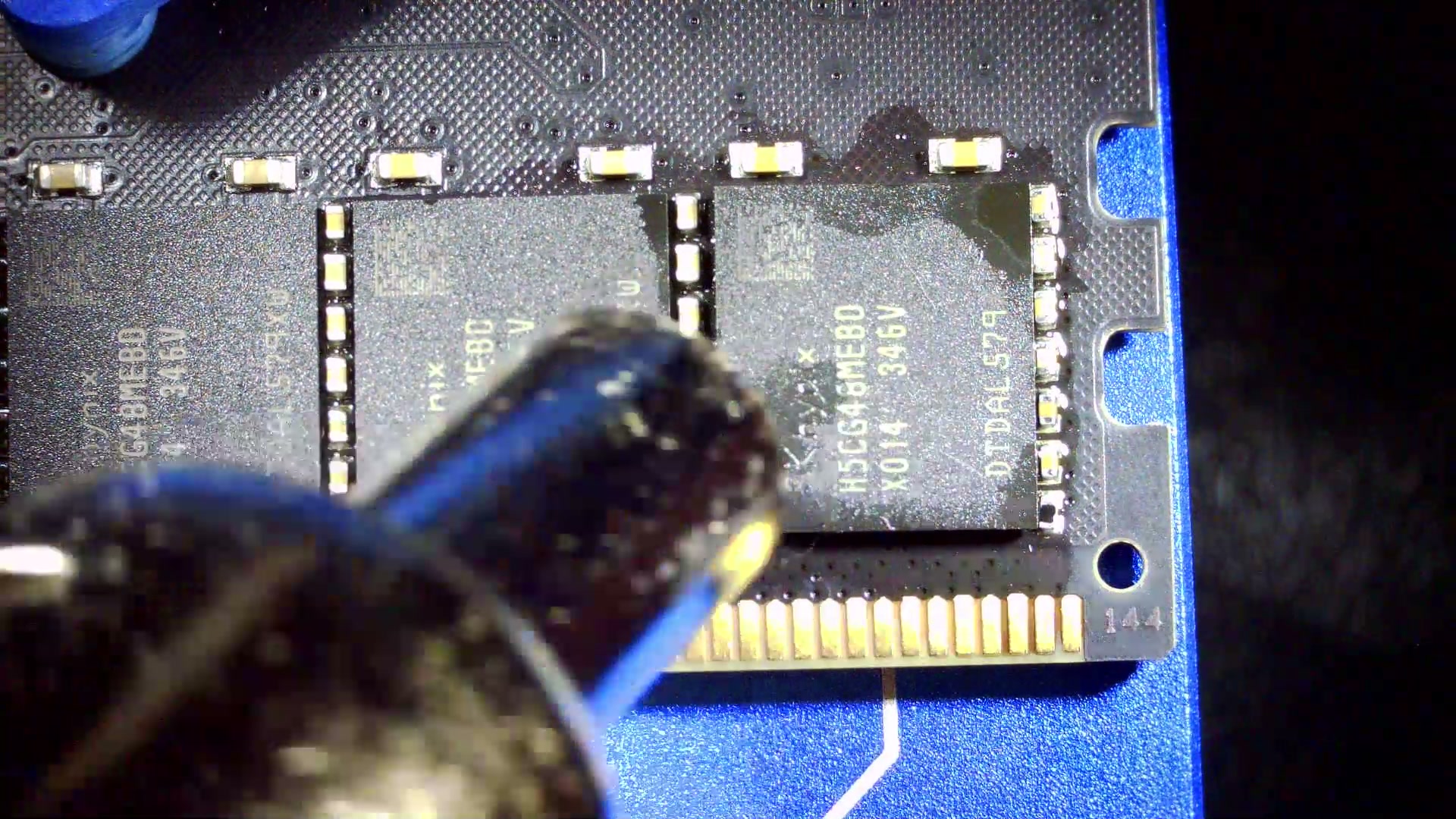 [Defective chip removal]
Heating the faulty chip with a hot air gun and separating it from the PCB
Step 2. PCB Pad Cleaning
After chip removal, residual solder and flux residue are cleaned from the pad site. Clean pad surfaces are essential for the new chip's solder balls to bond uniformly to each pad. IPA (isopropyl alcohol) and precision swabs are used for thorough cleaning.
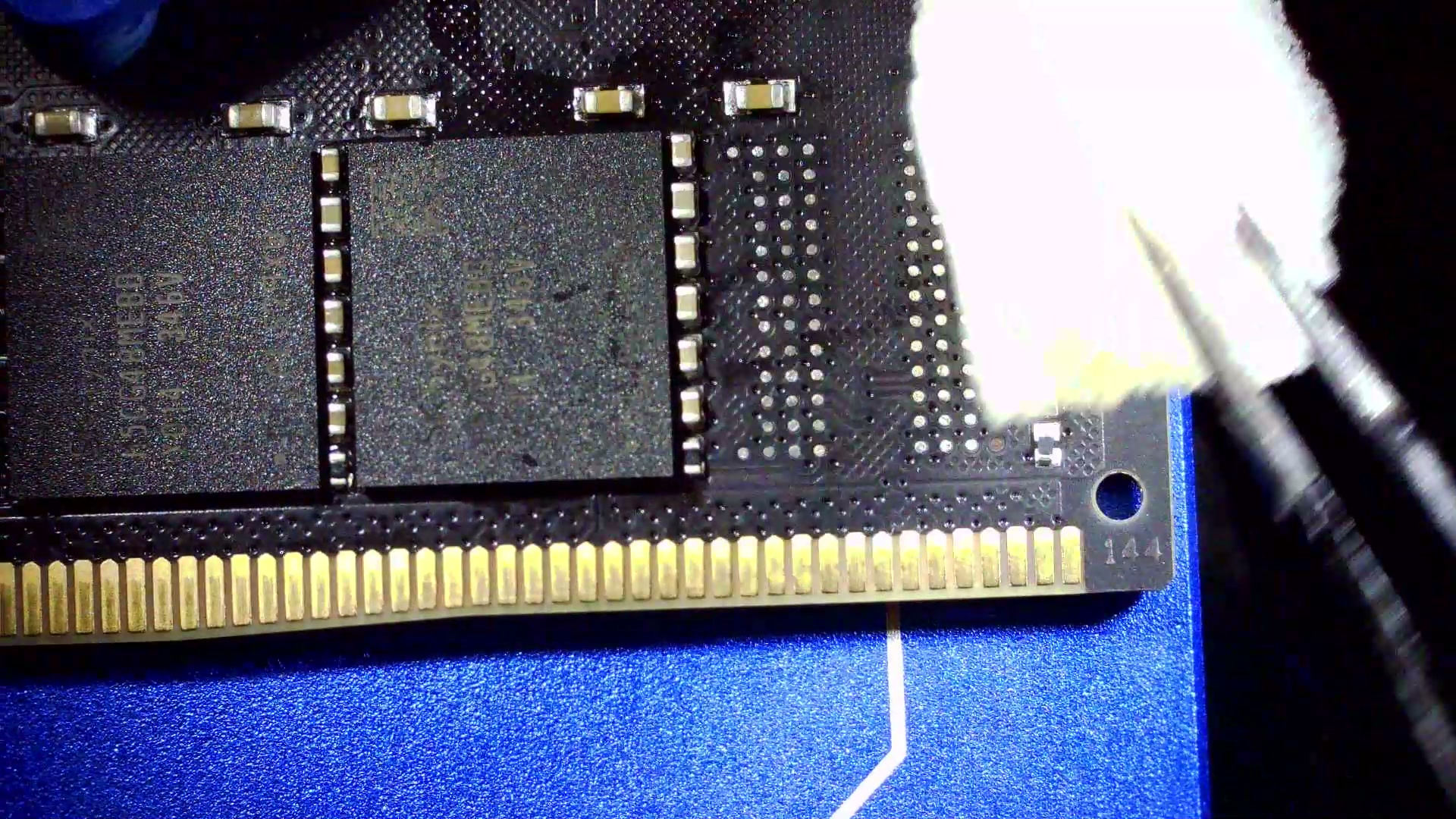 [PCB pad cleaning] Cleaning residual solder and flux from the removal site
Step 3. Donor Chip Solder Wicking
The underside of the donor (functional) chip still has old solder attached to its BGA pads. Using a soldering iron and desoldering braid (solder wick), the residual solder is absorbed and removed. This process is repeated until the pads are clean and flat — the quality of this step directly determines the quality of the reballing that follows.
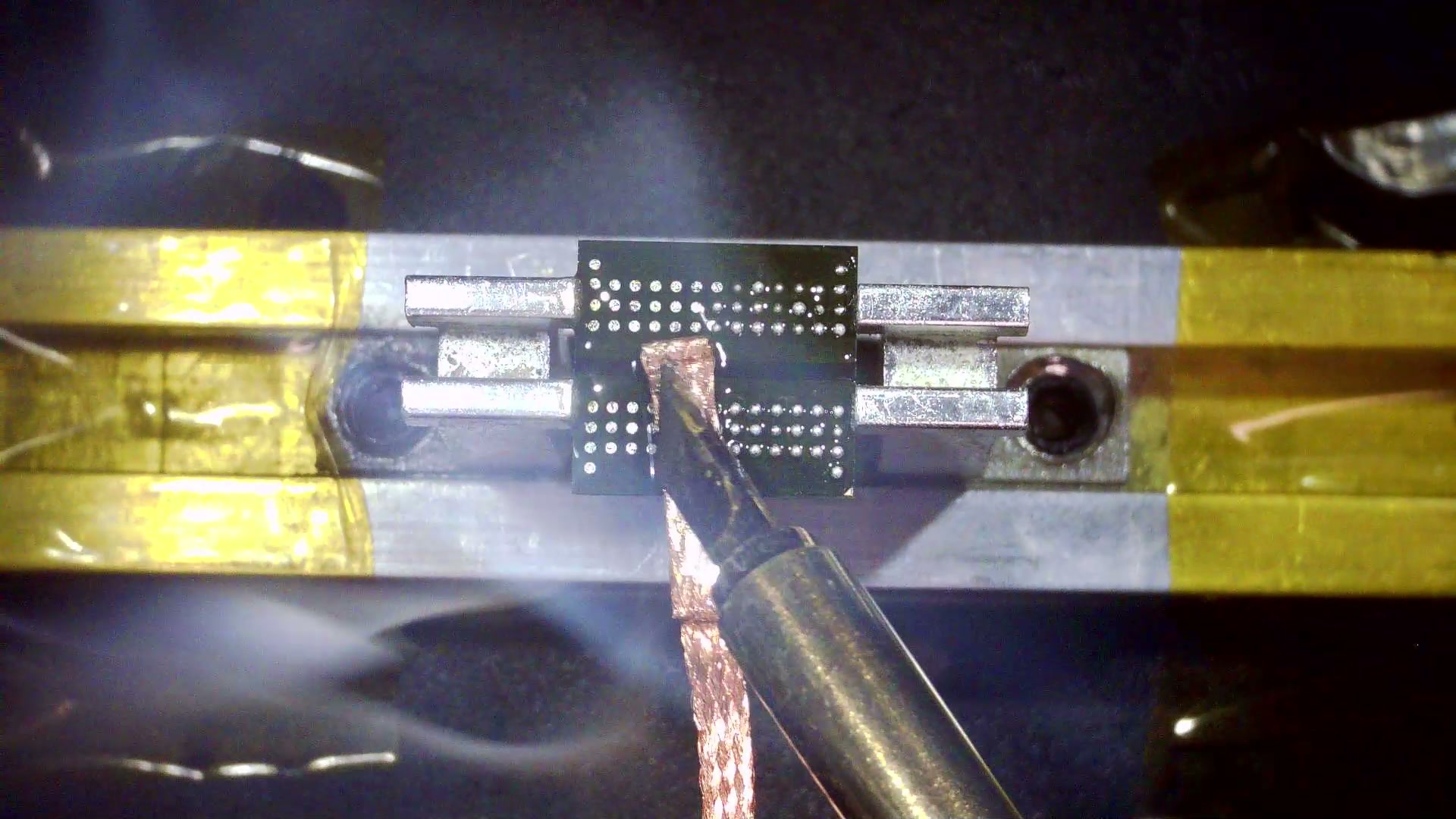 [Donor chip solder wicking] Removing residual solder from the donor chip using solder wick and soldering iron
Step 4. Donor Chip Cleaning
After solder wicking, the donor chip is cleaned with IPA or other solvents. All flux residue and micro-particles must be completely removed so that solder balls attach uniformly during the reballing process.
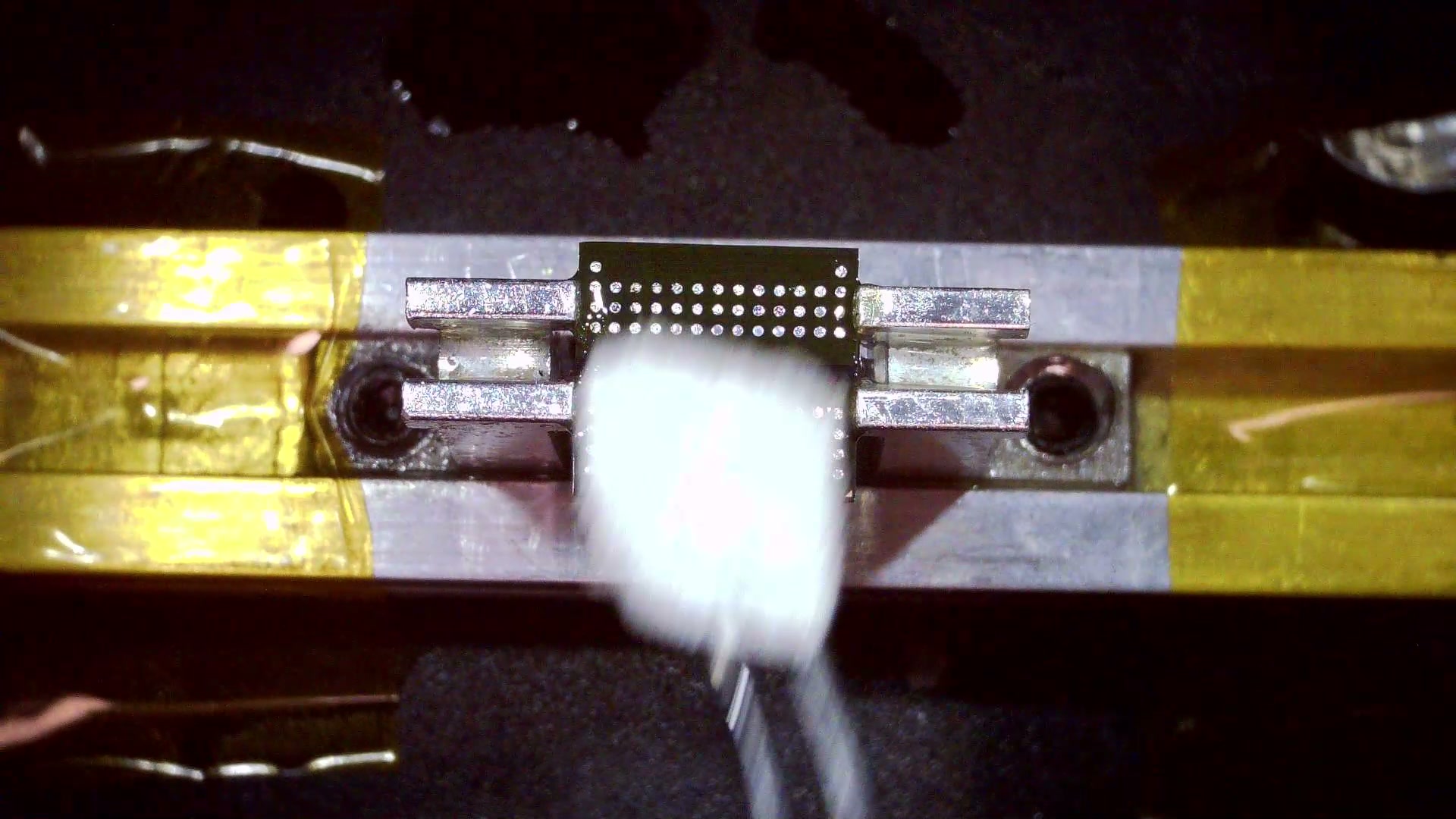 [Donor chip cleaning] Solvent cleaning of the donor chip surface
Step 5. Donor Chip Reballing
New solder balls are attached to the cleaned donor chip through the reballing process. A reballing stencil is aligned to the chip, solder balls are placed, and heat is applied to form uniform BGA solder balls. Consistent ball size and height are critical for reliable contact across all pins.
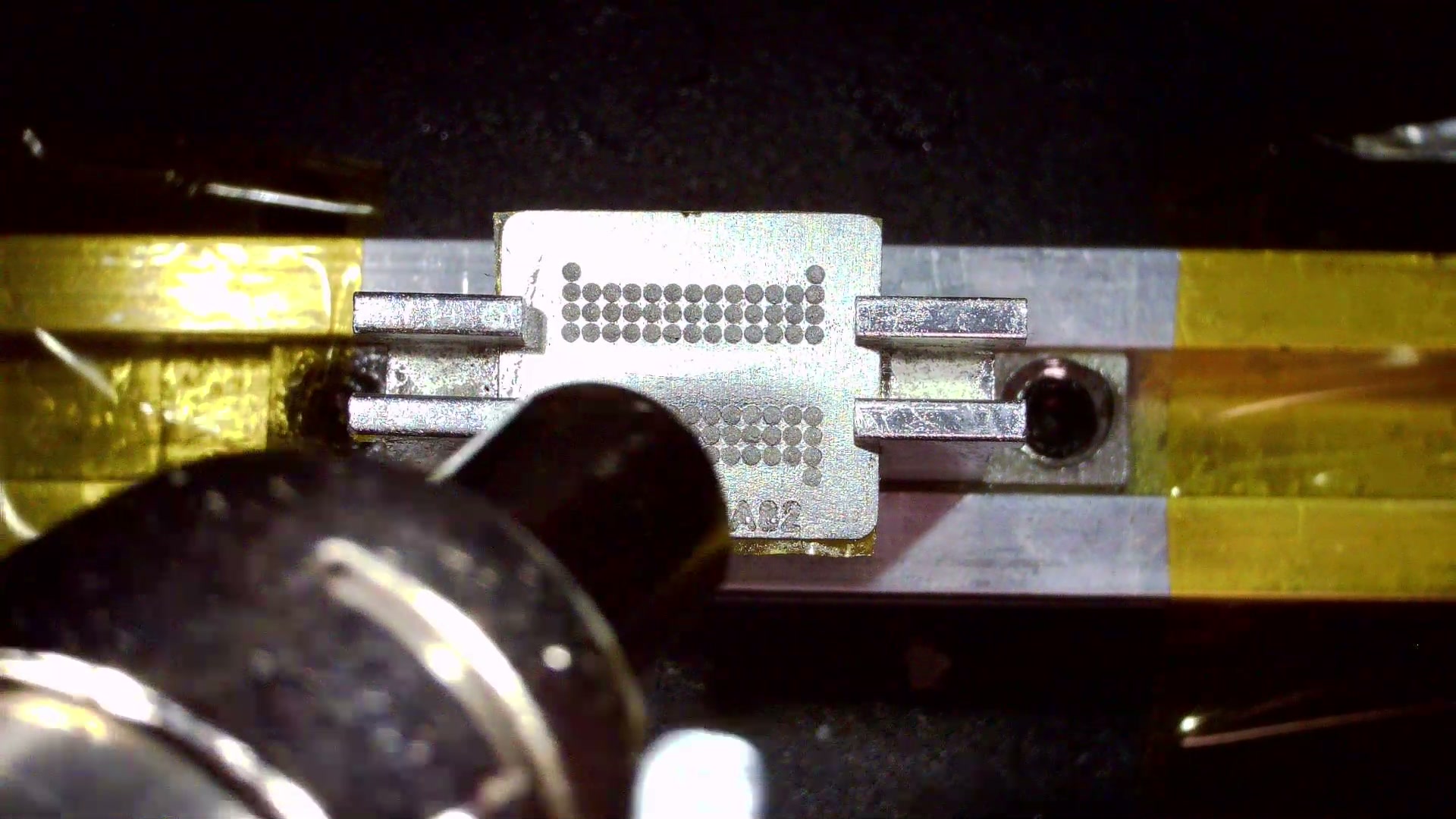 [Donor chip reballing] Forming new solder balls using a reballing stencil
Step 6. PCB Flux Application
Flux is applied to the PCB pads on the target memory module. Flux aids solder ball-to-pad bonding during reflow and prevents oxidation — it's an essential material. Applying the right amount evenly is critical.
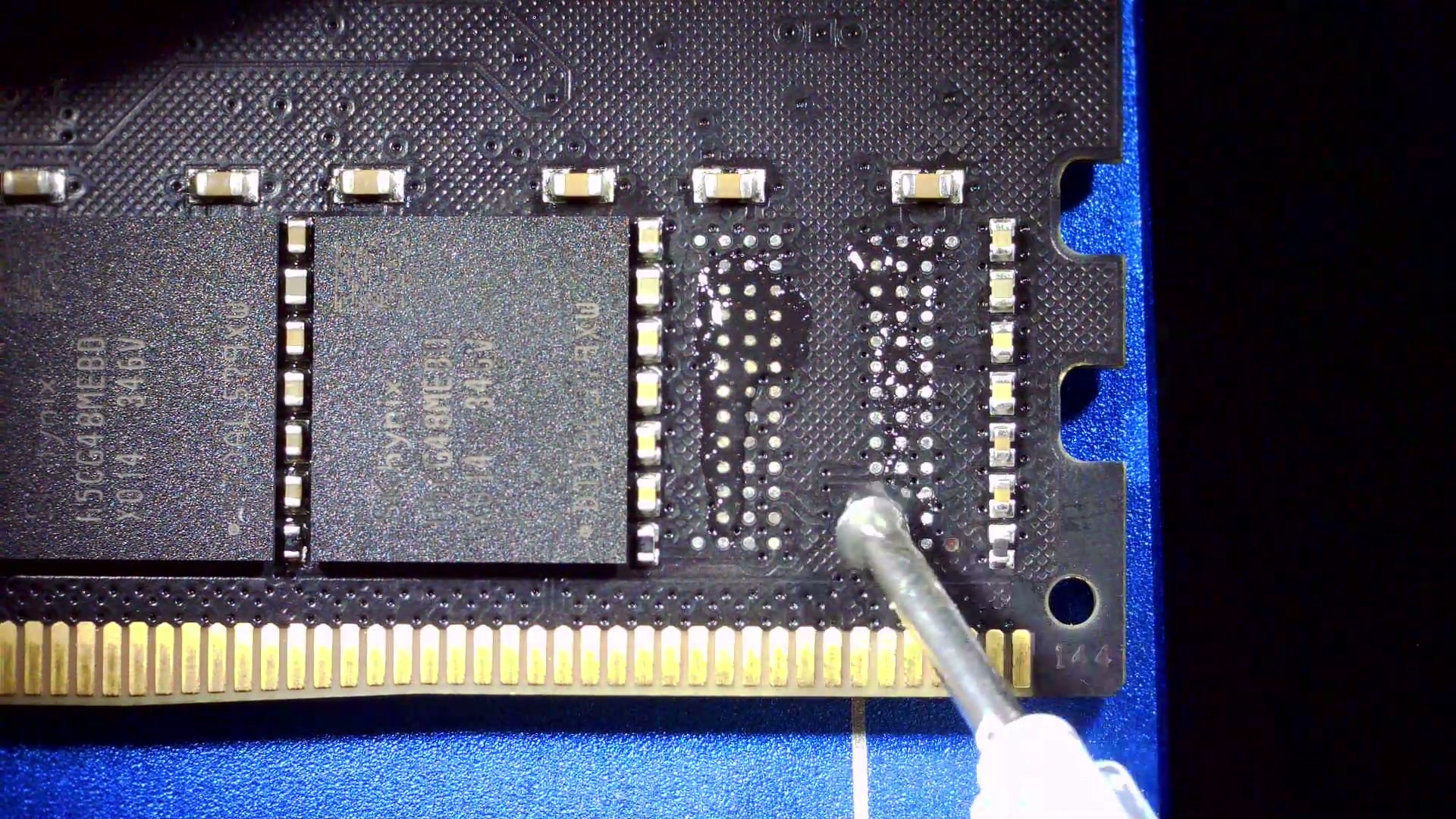 [PCB flux application] Applying flux to the target memory PCB pads
Step 7. Donor Chip Placement
The reballed donor chip is placed onto the precise location on the PCB. Using the pin 1 marker as reference for orientation, the chip is aligned under a microscope so that every solder ball matches its corresponding pad exactly.
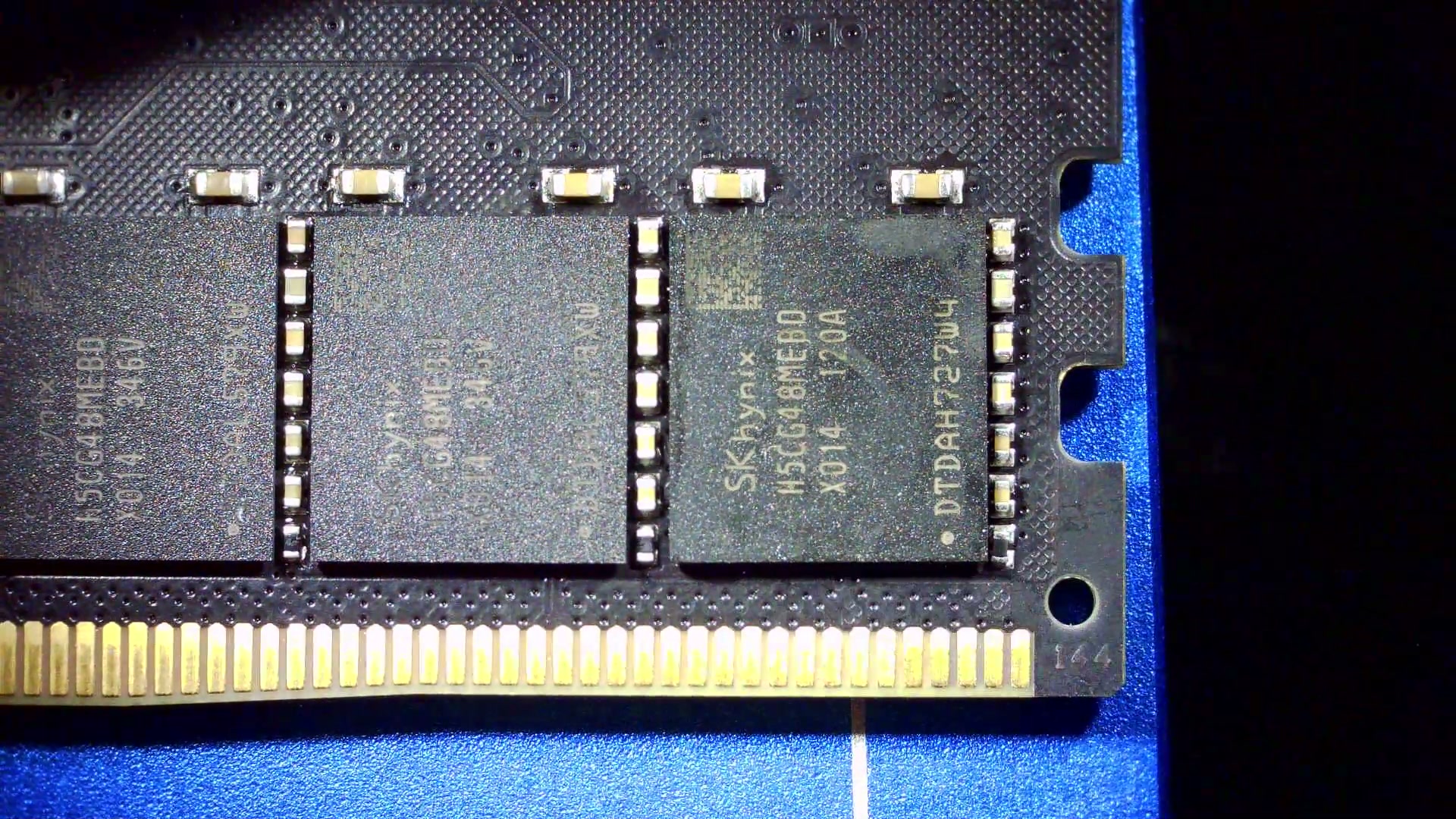 [Donor chip placement] Precision alignment using the pin 1 marker under a microscope
Step 8. Hot Air Reflow
With alignment confirmed, hot air reflow is performed using a heat gun. Following a controlled temperature profile — preheat, main heat, and cooling — the solder balls melt and form complete bonds between the chip and PCB pads.
Temperature and timing are precisely managed to prevent thermal damage to both the chip and the board.
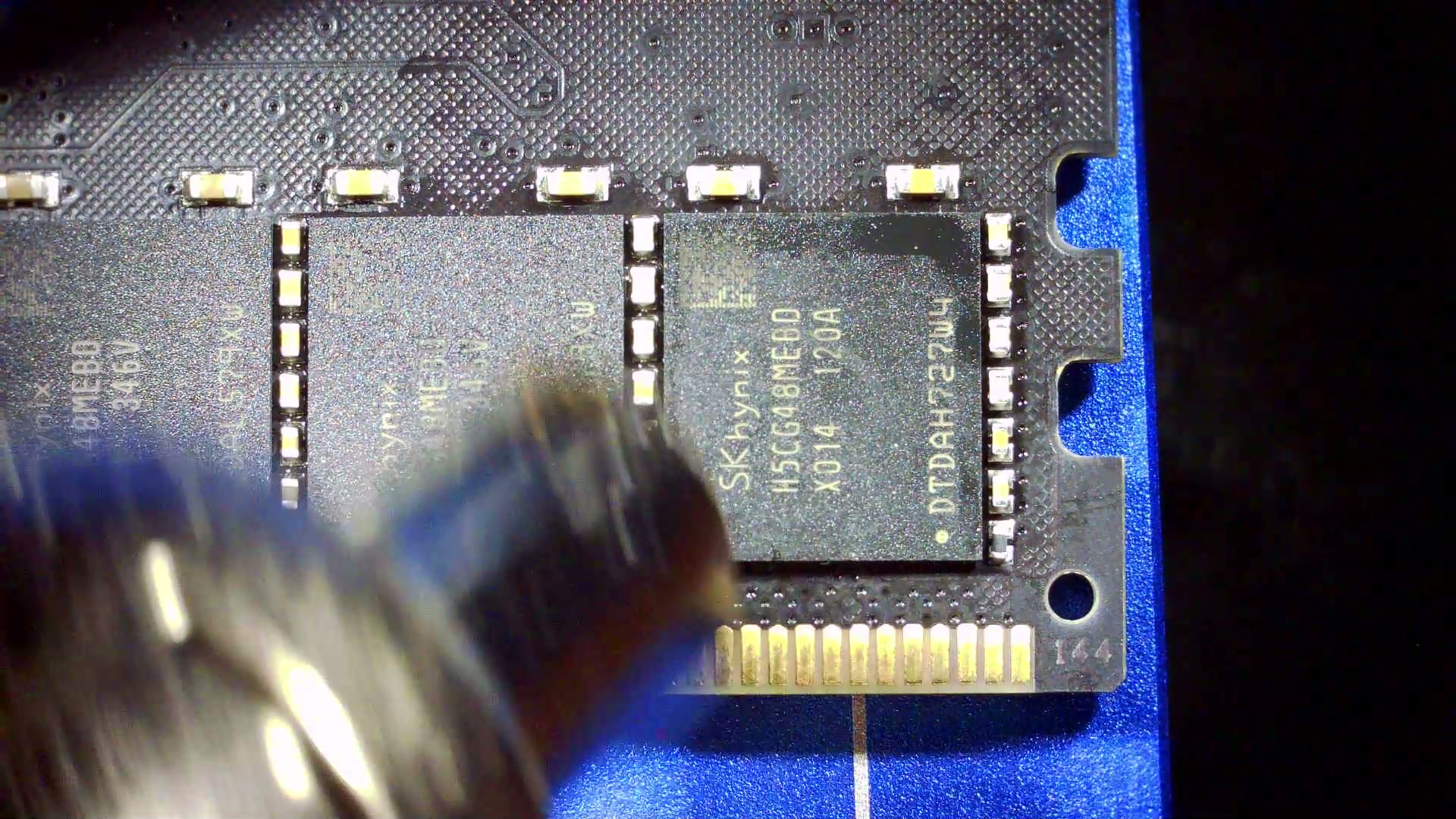 [Hot air reflow] Hot air reflow in progress — controlled preheat, main heat, and cooling cycle
Donor Chip Preparation Makes the Difference
The most common cause of failed BGA rework is "poor donor chip preparation." If old solder isn't fully removed, reballing produces uneven solder balls. If cleaning is insufficient, flux residue causes bonding failures.
ResolderWorks performs a rigorous 3-stage donor chip preparation — solder wicking, cleaning, and reballing — to ensure rework quality.
ResolderWorks Repair Services
- Server memory DRAM chip replacement (DDR3 / DDR4 / DDR5)
- Defective chip removal and donor chip BGA reballing & reflow
- Full donor chip preparation: solder wicking, cleaning, reballing
- Bulk repair available for enterprises and data centers
- Post-repair memory tester re-testing included
ResolderWorks handles the entire process in-house — from diagnostics through repair to final verification. If you need server memory repair, reach out below.
Need Server Memory Repair?
We specialize in DRAM chip replacement and BGA rework for DDR3 / DDR4 / DDR5 server memory modules. Bulk repair for enterprises and data centers is also available.